
The promoter-brothers, distant cousins to IndiGo's Rahul Bhatia, are eyeing Air India's ground handling subsidiary to augment their aviation services business even as they make a big play in EVs.

The car was expected to have a price tag of Rs 10 lakh and launch was slated for this June.

Known for its phones and emerging from nowhere in the segment, it might take on the scooter Goliaths.

'There are obvious concerns regarding revenue leakage which is understandable, but there are also concerns about whether or not well accepted, judicially tested, fair and proper procedures are being followed during such arrests.'

'Revival is happening slowly.' 'But that is, if the pandemic is controlled.'
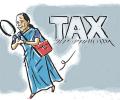
However, the department has not changed ITRs significantly, considering Covid-19 crisis.

In a communication to the empowered committee on PLI recently, the Indian Cellular & Electronics Association (ICEA) has stated that except one player (Samsung), all the other eight players (which include vendors of Apple Inc) selected under the scheme were facing numerous challenges in fulfilling the qualification criteria.

As a tech services company, Ola has never been in hardcore manufacturing. And unlike in ride hailing, which is a two-player market (Uber is the only other competitor), in two-wheelers it faces many entrenched players. But most of all, rivals say Ola's targets are out of sync with most, even ambitious, projections.
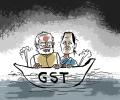
CAG recommended fixing a definite time frame for rolling out simplified GST return forms.

Disney-Star generated advertising revenue of over Rs 27 billion for IPL 2020.

Italy may be the home of premium buffalo mozzarella cheese, but India could soon give the country a run for its money in this regard. India's largest dairy cooperative, Amul, has submitted a plan to the government, aiming to turn the country into a global hub for the export of mozzarella cheese made from buffalo milk, which is sold at a hefty premium around the world. Mozzarella cheese is one of the products identified by the government for support under its Rs 10,900 crore production-linked incentive scheme (PLI), to give a massive push to food processing exports as well as to build Indian food brands.

The Cabinet has cleared a Bill to set up a government-owned development finance institution (DFI) with initial paid-up capital of Rs 20,000 crore so that it can leverage around Rs 3 trillion from the markets in a few years to provide long-term funds to infrastructure projects as well as for development needs of the country. To put it in perspective, Rs 3 trillion constitutes slightly less than 3 per cent of the Rs 111 trillion to be spent on over 7,000 projects in the National Infrastructure Pipeline from 2019-20 to 2024-25. Besides, the government will give Rs 5,000 crore as grant to the institution, Finance Minister Nirmala Sitharaman on Tuesday told the media after the Cabinet meeting.
Individuals flew the flag for philanthropy in FY20, escalating their contribution significantly in comparison with company and foreign fund donations, according to the Dasra/Bain & Co India Philanthropy Report of 2021. Funding by individual philanthropists went up by 42 per cent from Rs 21,000 crore in FY19 to Rs 30,000 crore in FY20.

Recently, Prime Minister Narendra Modi met over 40 CEOs across broad swathes of industry, ranging from makers of mobile devices, auto components, food products to telecom networking equipment and pharmaceuticals. The agenda: To discuss how to make India an integral part of the global supply chain. The focus of the discussion would be the much touted yet not so well understood production-linked incentive scheme (PLI), the centrepiece of the government's drive to massively boost the manufacturing sector. To do so, the government has created a war chest of over Rs 197,000 crore to be paid out as incentives to over 14 industries in five years. There are three objectives to the scheme, two explicitly stated, one implied.

The apex court has settled the long-pending dispute between companies such as Samsung, IBM, HP & others and the tax department.

Taking lessons from that, I would think seamless digital payments is something you have to clearly have a roadmap for, the FM said.

Over 10 Indian start-ups with total valuations of $84 billion (some are planning fresh fund-raising) are bracing to launch initial public offerings (IPOs) in the next 36 months. While the size of their IPOs is under discussion, estimates are that they would together raise a minimum of over $8-10 billion during the initial listing.

Several factors have held India back. One is DoT policy somersaults and lack of clarity on whether to or not to ban Chinese gear makers.

The Big Two telecom companies have accelerated their moves towards this next-gen technology, though they have chosen very different routes to getting there.

Working hours cannot go beyond 48. Those who give a four-day week will have to provide three consecutive holidays after that.
 © 2026 Rediff.com - Advertise with us - Disclaimer - Privacy Policy - Sitemap - Feedback - About us - Terms of use - Grievances